


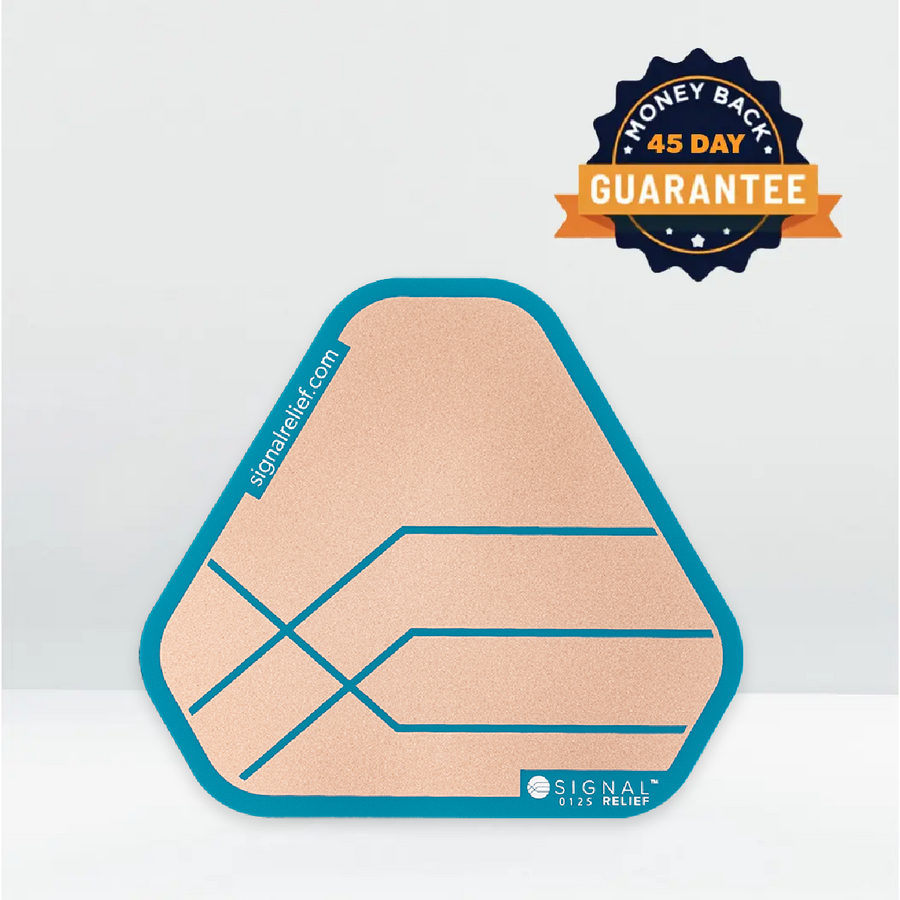
Signal Relief Patch
Soothing, everyday comfort for general aches and tension, anywhere you feel them.
Discomfort is more than a physical sensation. It’s a barrier between you and the life you love.


Discomfort is the result of an active back-and-forth between your body and your brain.1,2 Signals start in the body, travel up, and get interpreted before you ever consciously notice them.1
The feeling of discomfort is your body’s way of getting your attention. Think of it like a vehicle’s dashboard light: Even if it’s not necessarily an emergency, your body is indicating to you that something isn’t quite right.
How a nagging ache becomes something you actually notice:
Just your body’s own signaling system, returning to a better balance.
Tiny receptors throughout your body pick up on heat, pressure, or strain.3

That signal travels along your nerves and up through your spine.3,4
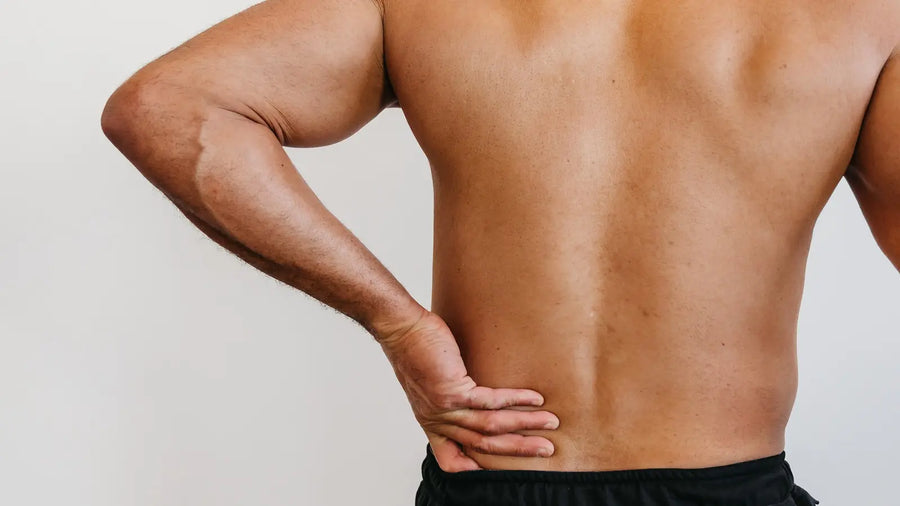
Your brain receives the signal and essentially determines how much attention it deserves – and how uncomfortable you should feel.1,4
The same source of discomfort can feel mild on one day and intense on another as your brain actively interprets the message your body is sending out.2,4
When you’re dealing with persistent aches, it often feels like you’re fighting a losing battle. No matter what you try, the discomfort returns like clockwork.
If your body is stuck in this loop, your nerves can stay more sensitive than usual, your muscles tense up to protect you, and that tension, ironically, can add to the discomfort you feel.4
1 in 5
To truly feel better, you don't just need to mask the sensation; you need support that helps your body settle back down.

When your body is uncomfortable, it can stay on high alert longer than it needs to – leaving relief feeling out of reach.4
Our innovative wellness products use patent-pending micro-antenna technology designed to work alongside your body in an effort to “quiet” the volume of discomfort.
Each Signal Relief product is designed to deliver a gentle, consistent sensation of relief – helping you get back to the life you love.
“Great relief from lower back and left knee discomfort. Able to enjoy taking my dog on short walks again. I am getting my freedom back and I love it.”
“Best I’ve felt in years.”
– Amy A.
“With Signal, I have relief. I’ve begun exercising again, and am hopeful. Hope. It’s huge. I’ve already gifted these patches to people I love.”
– Deborah H.
“I am so thankful for my Signal Relief patch. I am back in action again on the Pickleball court.”
– Judy G.
Soothing, everyday comfort for general aches and tension, anywhere you feel them.
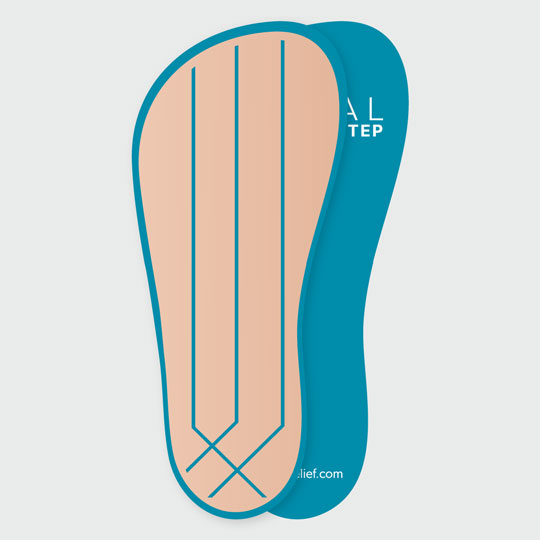
Designed to support foot comfort, addressing the part of the chain that literally carries your weight all day.
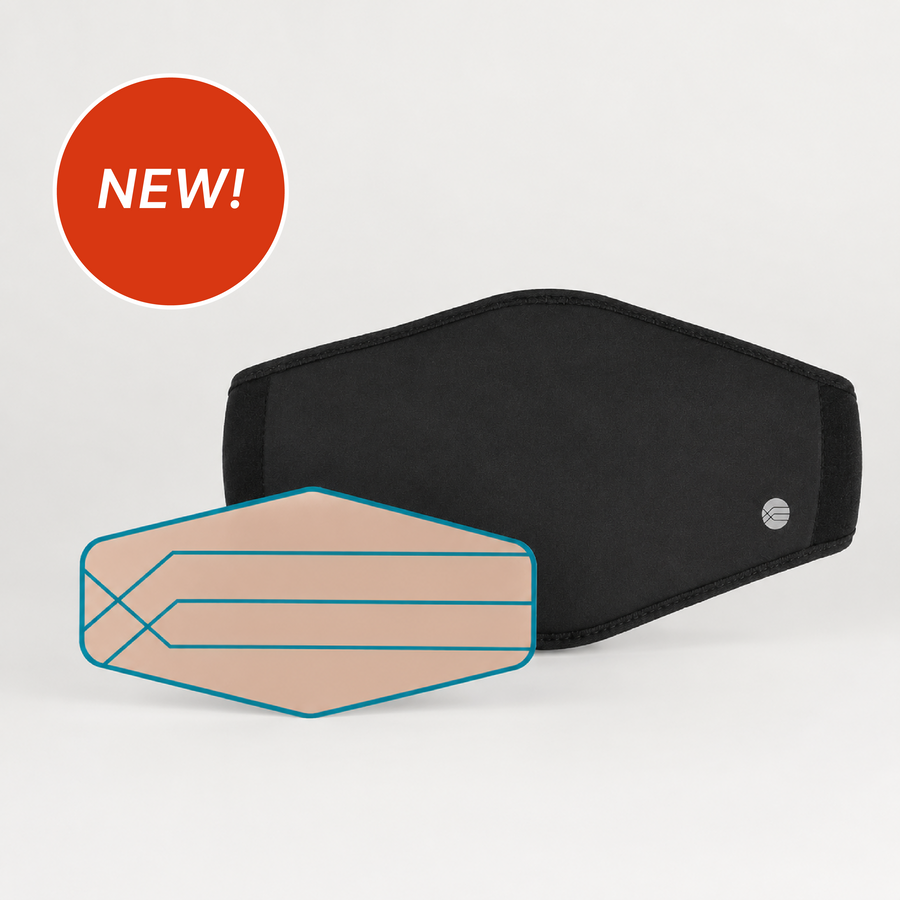
Targeted comfort for your lower back and lumbar region, often a central point where most feel compensation from other areas.

Did you know…
Easing everyday discomfort can help you fall asleep more easily and stay asleep longer, supporting better rest overall.8
When you’re more comfortable, it’s easier to stay active, helping to prevent the stiffness that comes from sitting still.9
Addressing discomfort can help ease the mental load that comes with it, supporting a calmer, steadier mood throughout the day.10
When discomfort isn’t front and center, it’s easier to stay engaged with the people and the activities you care about.11
1 National Institute of Neurological Disorders and Stroke; National Center for Complementary and Integrative Health; International Association for the Study of Pain; Institute of Medicine. "Ouch, that hurts!" The science of pain. NIH MedlinePlus Magazine. Published May 23, 2023. Accessed July 23, 2026. https://magazine.medlineplus.gov/article/ouch-that-hurts-the-science-of-pain
2 Complete Neurological Care. The Neurology of Pain: How Our Brains Interpret Pain. Complete Neurological Care. Published September 9, 2024. Accessed July 23, 2026. https://www.completeneurologicalcare.com/post/the-neurology-of-pain-how-our-brains-interpret-pain
3 Willour C. "Pain Starts in the Brain – Understanding the Nerve Connection!" Pain Institute of Southern Arizona. Published March 31, 2025. Accessed July 23, 2026. https://pisapain.com/pain-starts-in-the-brain-understanding-the-nerve-connection/
4 Rath L. The Connection Between Pain and Your Brain. Arthritis Foundation. Accessed July 23, 2026. https://www.arthritis.org/health-wellness/healthy-living/managing-pain/understanding-pain/pain-brain-connection
5 Cleveland Clinic. Referred Pain: What It Is, Causes, Treatment & Common Areas. Cleveland Clinic. Published September 12, 2023. Accessed July 23, 2026. https://my.clevelandclinic.org/health/symptoms/25238-referred-pain
6 Good Feet. How Foot Misalignment Leads to Hip Pain: The Kinetic Chain. Good Feet. Published November 19, 2025. Accessed July 23, 2026. https://www.goodfeet.com/community-footsteps/articles/how-foot-problems-cause-hip-pain:-the-kinetic-chain-explained
7 Ultimate Arch Orthotics. It's All Connected. Ultimate Arch Orthotics. Published January 19, 2024. Accessed July 23, 2026. https://ultimatearchorthotics.com/connected/
8 Rathleff MS, et al. Importance of Sleep for People With Chronic Pain: Current Insights and Evidence. JBMR Plus. Published June 2, 2022. Accessed July 23, 2026. https://academic.oup.com/jbmrplus/article/6/7/e10658/7479011
9 Vaegter HB, et al. Physical activity should be the primary intervention for individuals living with chronic pain: A position paper from the European Pain Federation (EFIC) "On the Move" Task Force. European Journal of Pain. Published May 4, 2024. Accessed July 23, 2026. https://onlinelibrary.wiley.com/doi/10.1002/ejp.2278
10 Mental Health America. Chronic Pain and Mental Health. Mental Health America. Accessed July 23, 2026. https://mhanational.org/resources/chronic-pain-and-mental-health/
11 International Association for the Study of Pain (IASP). Integrative Physical Activity and Exercise to Address Acute and Chronic Pain. IASP. Published May 15, 2024. Accessed July 23, 2026. https://www.iasp-pain.org/resources/fact-sheets/integrative-physical-activity-and-exercise-to-address-acute-and-chronic-pain/
Get extra order benefits with checkout+, know your purchase is protected every step of the way.
We'll cover lost, stolen, or damaged packages with fast replacements or refunds.
File a claim online in minutes and our team will make it a priority.
By purchasing, you agree to our Privacy Policy and Terms & Conditions.

